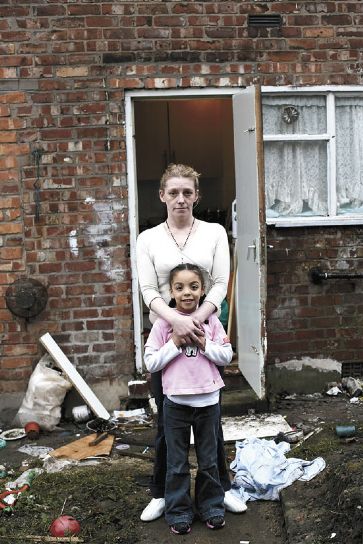
Secret Poverty: the State of Poverty in the west
Liam McLoughlin
Poverty is often described more racially than most expect. A simple test would be to search ‘Poverty’ in Google images, the results show on the first page 33 pictures of black or South Asian people in a state of poverty; this is compared to just one white man shown. Poverty definitions in the west ,for whatever reason, is excluding any plight in the western world, this could be for a Varity of reasons: a superiority complex; the opinion that developed countries do not have such issues; or that the media only focus on poverty in Africa and Asian sub-continent.
The objective of this blog is to focus on the fact that poverty is not a problem exclusive of countries with a low GNP, it is common, abet hidden, in the western world. We will explain the issue by an analysis of the United Kingdom’s own secret poverty.
The United Kingdom Government define poverty in three sections:
Absolute poverty: The inability to maintain ‘body and soul’ through lack of resources.
Relative poverty: Low amount of income in relation to the average income of a normal household income. The use of this is to measure the ability to participate in daily life.
Social exclusion: A result from a combination of unemployment, poor skills, low incomes, poor housing, high crime environments, bad health, and family breakdown.
Meanwhile there are two other types that have in use by the media:
Water poverty: Spending more than 3% of yearly disposable income on water bills.
Fuel poverty: When a household needs to spend more than 10% of its income on heating a home to a reasonable level. A reasonable level is widely reported to be from 18°c to 21°c.
For the purpose of time this post will focus on the first three though it may be worthwhile for the reader to research further into water and fuel poverty.
The level of poverty in the United Kingdom:
The United Kingdom does relatively little to showcase poverty in the United Kingdom, even when it is showed it is mostly focused on either Child or Pensioner poverty. As shown by the higher amount of news coverage to them both; a major factor why the Child and pensioner poverty was a major policy for Labours 2005 manifesto. (an example of one of the many reports of pensioner poverty is shown in the further reading)
The Elizabeth Finn Trust in 2005 found over 3.9 Million single people in the UK was living below the poverty lines in 2005. While figures from the government found that in the 1994-2004 saw that 17-18% of people in the UK lived in poverty and the CIA fact-book mentioned that in 2006 the UK poverty was at 14%. Considering the figures, the people in the United Kingdom who struggle live due to poverty is a high figure. However when seen comparatively with other countries is seen as an acceptable figure, a fact many think is an injustice.
How is Poverty in the UK represented in the media?

Joseph Roundtree foundation report discovered that in the media, most of the reports of poverty were from outside the United Kingdom. In 40 hours worth of non-news television analysis poverty was only mentioned twice, both from the show shameless. The report showed that viewers found poverty in the UK to show negative conisations, such as ‘scroungers’ and ‘benefit cheats’- partially when poverty covered refugees, asylum seekers, or young mothers.
Generally reports show that the issue of Poverty in the United Kingdom is under represented. Even when it is, the media portray the people under the poverty line was a taboo or with distain.
However what causes poverty in the UK?
A study shown that there is many causal links to poverty in the United Kingdom, however the major causes are:
Disability: Many whom are disabled may have to rely on state welfare and family support networks to survive. Unable to find suitable work they often have relatively low incomes, resulting as being classified as under the poverty line.
Illness: Unlike the disabled, people are temporary unable to work. Regular illness may push employers to lay off the employee; this has been seen in the prison service for members of staff who fail to pass the ATOS test.
Mental illness: Similar to both illness and disability. People who have long term mental illnesses may struggle to find long term work.
Unemployment: Due to lack of jobs available, lack of training or even the wrong skills for the current market. There is plenty of reasons why members of the public fail to gain employment.
Poor background: People whom have had poor educational upbringings or issues with crime in their youth may have struggles finding employment. Tarnished records and the inability of lack of accessibility to clime the employment ladder may push people into long term unemployment.
Race: It has been found there is a correlation between race and poverty. (
http://www.poverty.org.uk/06/index.shtml) The proportion of people who live in low-income households in the United Kingdom is: 20% for White people; 30% for Indians and Black Caribbean’s; 50% for Black Africans; 60% for Pakistanis; and 70% for Bangladeshis.
Conclusions
From these figures it is apparent that in the United Kingdom poverty is an issue in the UK and it is clearly represented in the statistics. From the data is has also been discovered what different types of poverty exist and for what reasons people are put in the unfortunate dilemma of being unable to reach out and above the poverty line. The issue is however that the media in the United Kingdom are unwilling, or unable, to portray the issue in a correct manor this is by either pushing the issue under the carpet; displaying poverty to be the fault of the people affected; or turn poverty into comedy pieces like shows shameless. It is clear the way media portray poverty in the UK is the issue and should be further addressed.
Further reading:
Reporting Poverty in the United Kingdom
Statistics of poverty in the United Kingdom
Example of pensioner poverty news report from 2005
Race and poverty in the UK
Heath, A. and Cheung, S. Y. (2006) Ethnic penalties in the labour market: Employers and discrimination. DWP Research Report No. 341. Leeds: Corporate Document Services.
Disability and Poverty in the UK
Social Services: Made Simple by Tony Byrne, BA, BSc(Econ.), and Colin F. Padfield, LLB, DPA(Lond)
Liam also hosts his own blog about political nuisances in the United Kingdom